
Bridal casquettes: what they are and how to choose one
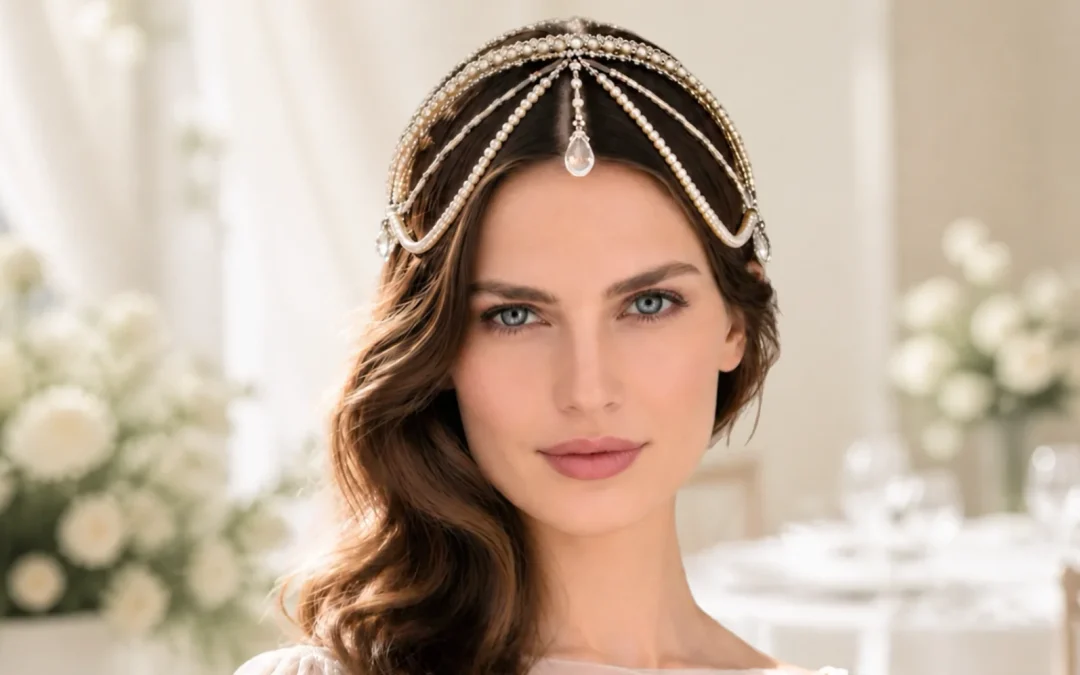
When someone asks for “something small, not a wide-brim hat, but something that shows”, what they are almost always describing is a casquette. Even so, many people rule it out before trying one on because they think it belongs to grandmothers or the British royal family. Neither is true....
Here we tell you exactly what it is, which weddings it suits, and how to find the one that works for you — which is what really matters.
What is a casquette
A casquette is a headpiece with a rigid base that sits on top of the head, with no brim or a minimal one. It covers a small section of the hair and is secured with a comb, elastic, or clip. That base is what sets it apart from a flower or feather headpiece mounted on a headband: the casquette has its own body — it reads as a true millinery piece.
It can be round, oval, flat, or domed. It can feature a veil, netting, feathers, or a bow. What does not change is its size: it sits between the pamela, which covers half the face, and the lightweight headpiece that barely takes up any space.
That is why it works so well at weddings. It shows in the photos, gives you presence at the ceremony, and does not block the view of the person sitting behind you in the church.
The most common types of casquette
– Pillbox
This is the best-known casquette: cylindrical, flat-crowned, and brimless. Jackie Kennedy made it famous in the sixties and it has come back strongly this year. El Debate devoted an article to it in April with a title that made us smile, “Pillbox or casquette, the fashionable hat that is very hard to pull off”. Hard it is not, but it does require a good pattern and the right placement. If this particular style interests you, we have an article on why it is worth commissioning a bespoke pillbox.
– The flat or disc casquette
A thin base, almost like a disc, worn tilted to one side. It is the lightest style and the one that works best with low updos. It takes decoration well because the base does not compete with anything.
– The casquette with veil or netting
Any of the above with a short veil falling over one eye or across the forehead. It gives a 1940s and 1950s feel that works very well at afternoon weddings. The veil should be short and light; if it reaches the chin, it starts to look bridal.
– The winter casquette
En otoño e invierno lo hacemos en fieltro o terciopelo, materiales con más peso y más color que la paja o el sinamay del verano. Un casquete de fieltro burdeos o verde botella queda muy bien con los abrigos y los tonos oscuros de esta época.
When to wear a casquette at a wedding
The classic rule says the pamela is for morning weddings and that in the afternoon pieces become smaller. The casquette has the advantage of working for both.
At a morning wedding you can wear a larger casquette, with more decoration, even with some volume on top. If the ceremony is outdoors in the sun, the pamela is still the most comfortable option, but in a church or registry office the casquette looks just as elegant and lets you see and be seen.
At an afternoon or evening wedding, the casquette is almost always a better choice than the pamela. Go smaller, choose a material with some sheen or texture, and consider a veil — it catches the light beautifully at night.
There is one tricky moment: the reception dinner. It is normal to take off a pamela when sitting down to eat, but the casquette can be kept on throughout the celebration. That is one of the reasons so many guests prefer it.
How to choose your casquette
There is no casquette that suits everyone. There is one that suits you, and to find it you need to pay attention to three things: your face, your hair, and your dress.
– According to face shape
If you have a round face, look for casquettes with some height or worn at an angle — they elongate the oval. With a longer face, wider and flatter casquettes worn further to the side work better. Oval faces have it easy: almost any shape suits them, so they can simply choose by preference.
With strong features, a small and understated casquette. With softer features, there is more room to play with decoration.
– According to hairstyle
The casquette calls for hair that is up, or at the very least swept back on the side where it sits. A low bun is the hairstyle that suits it best, as it leaves the casquette alone at the top and balances the overall look. It can also work with a loose mid-length blow-out, but it needs to be secured well and the base should not sink into the hair.
If you are going to the hairdresser, bring the casquette to the trial run. It seems obvious, and almost no one does it.
– According to dress
A patterned dress calls for a plain casquette. A plain dress leaves room for the casquette to carry feathers, flowers, or a bolder colour. And the colour does not need to match the dress exactly — it often looks better to pick up a tone from the print or from the shoes.
How to position it so it stays in place all day
The usual approach is to tilt it to one side and slightly forward, above the eyebrow. Placed straight and high on top of the head it looks stiff and unnatural.
To secure it, a comb is the most reliable option if you have your hair up. An elastic band, hidden under the hair behind the ear, works well with loose styles. In both cases, two hairpins crossed at the base will keep it in place even when you.
Try it on at home for an hour before the wedding day. If it bothers you in that time, it will bother you twice as much at the celebration, so it is worth adjusting it beforehand.
Casquettes from our studio
At our Seville studio we make casquettes both as part of our collection and to commission. If you would like to see an example, take a look at the Pillbox Agatha from our collection. If you prefer something designed around your dress, we create it with you from scratch.
And if the wedding is in the coming months, our guide to hats and headpieces for winter weddings has more ideas on materials and colours for this time of year.
Frequently asked questions about casquettes
What is the difference between a casquette and a headpiece?
The casquette is a type of headpiece. What sets it apart is the rigid base shaped like a small hat. A flower or feather headpiece on a headband does not have that base.
Can you wear a casquette at an evening wedding?
Yes, and it is one of the best options. Choose a contained size and a material with some sheen, such as velvet or satin, or add a short veil.
Should you take off the casquette at the reception dinner?
No. Unlike the pamela, the casquette can be worn throughout the entire celebration.
Which side of the head does it go on?
There is no fixed rule. The right side is most common, but what matters is your parting and your best angle in photos.
How far in advance should I commission a bespoke casquette?
It depends on the piece and the time of year, so ask us about the lead time when you book your appointment. During the peak wedding season, from April to October, it is worth allowing plenty of time.
Does a casquette suit someone with short hair?
Yes. With short hair it is secured with an elastic or a small clip, and it tends to look very good because the casquette does not compete with the volume of the hair.
