
Hats and headpieces for winter weddings
A January wedding has its advantages, starting with venues that still have free dates and that lovely mid-afternoon light. What changes is the wardrobe. Fabrics get heavier, the coat comes out, and straw, which never fails in May, suddenly looks out of place.
The same goes for hats and headpieces. In winter some materials work better, and some combinations are worth thinking through in advance, especially if part of the wedding is outdoors or you have to walk from the church to the reception.
The materials that work best for winter weddings
Felt
It's the winter material par excellence in millinery. It's made by pressing wool or fur fibres into a dense sheet, without weaving them, which is why it keeps you warm and holds its shape even in a little damp. If you'd like to know more, Wikipedia has a good entry on felt.
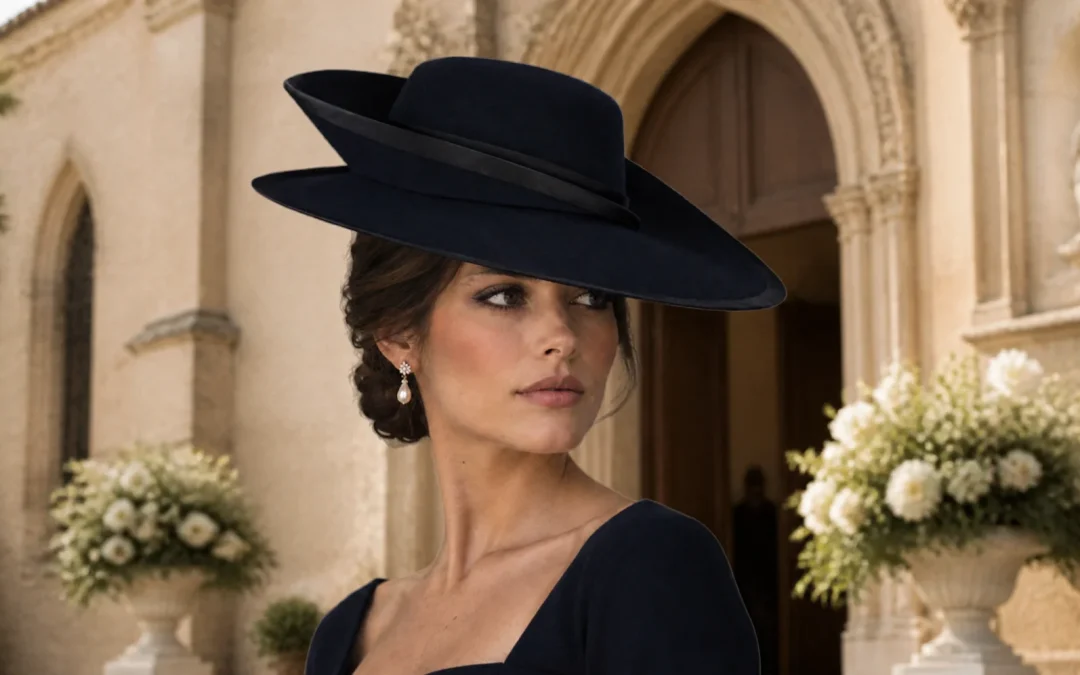
Felt takes strong colours and very different shapes: wide brims, tall crowns, deconstructed pieces. Our felt hat is made to size and looks just as good with a long coat as with a suit.
Velvet
The velvet look is back this winter. It gives colour depth and looks especially good in afternoon light. This season we're seeing it mostly in small headpieces, headbands and pillbox hats. We explained why it's returning in our autumn 2026 headpiece trends.
Feathers and net veiling
Feathers don't care about the season. In winter they look best in dark colours or in contrast with a felt headpiece. Net veiling works all year round and does a lot to soften a piece with hard lines.
What to save for spring
Straw, raffia and sinamay in light shades are lightweight materials, made for warm weather. Nobody will stop you wearing them in December, but next to a wool coat they look out of place. If you have a straw boater, put it away until May.
Morning or afternoon winter weddings
The old rule still applies: large hats and headpieces in the morning, small pieces in the afternoon. In winter, bear in mind that it gets dark very early. In Seville in December, night falls before half past six, so a five o'clock wedding starts in daylight and ends in the dark.
If the ceremony is mid-afternoon, think about an in-between piece: a medium headpiece, a small cap or a short-brimmed hat. It will work at the ceremony and won't look out of place at the reception.
How to pair your hat with your coat
At a summer wedding, the hat only has to get on with the dress. In winter, for much of the day, it sits alongside the coat, and that changes the proportions.
- Coat with a large collar or wide lapels: a short-brimmed hat or a small headpiece is better, so the two don't compete at shoulder height.
- Cape or collarless coat: leaves more space around the face and can take a wider brim.
- Fur or faux fur stole: a small headpiece worn to one side works better than a big hat.
- Colour: the hat can match the coat rather than the dress, because if the ceremony is outdoors it'll be seen with the coat on most of the time.
Colours for winter weddings
This is the season for deep shades: burgundy, bottle green, navy, chocolate or camel. They work very well in felt and velvet, and go with almost any coat. The GEHRY hat, for example, is made in navy felt and suits grey, black or camel coats.
If your dress is a light colour, a dark hat can act as a bridge to the coat. If the dress is already dark, a headpiece in a brighter shade, such as red or a muted mustard, lifts the face.
If you're the madrina
The madrina, traditionally the groom's mother at a Spanish wedding, stands in the front row for much of the ceremony and appears in almost every group photo. In winter that means her hat or headpiece will be seen both with and without her coat, inside and outside the church.
A felt or velvet piece with some volume works well, as long as it doesn't hide the face in profile. For a morning wedding, a medium-brimmed hat is the safest choice. For an afternoon one, a headpiece slightly larger than a guest would wear makes the difference without taking attention away from the bride.
Gloves, bag and other accessories
Gloves come back to weddings every winter, and with good reason: they keep you warm and finish the outfit. If the hat is felt or velvet, fine leather gloves in the same shade or a close one look lovely. Not everything has to match; it's enough for the hat, the gloves and the shoes to get on with each other.
The same goes for the bag. A small velvet or suede clutch suits a winter headpiece better than a raffia or straw one. And if you're wearing a stole, let it be the only piece with eye-catching texture near your face.
If the wedding is outdoors
In winter the enemy is the wind rather than the cold. A badly secured wide-brimmed hat turns into a sail. Ask for an elastic to be fitted that runs under the hair at the nape of your neck, or secure it with two hair grips crossed into your updo.
Felt copes well with drizzle, but silk and feathers need protecting. If rain is likely, bring a large umbrella that covers the whole brim, not a folding one.
Winter hats for men
For men, winter is the best time to start wearing a hat. A short-brimmed felt with a band in the shade of the tie or the suit looks good with a wool overcoat and doesn't feel like dressing up. You can see all our styles in Hats for events and weddings.
One difference in etiquette: men take their hats off when they go indoors, including in church. Women can keep theirs on during the ceremony and the drinks reception.
